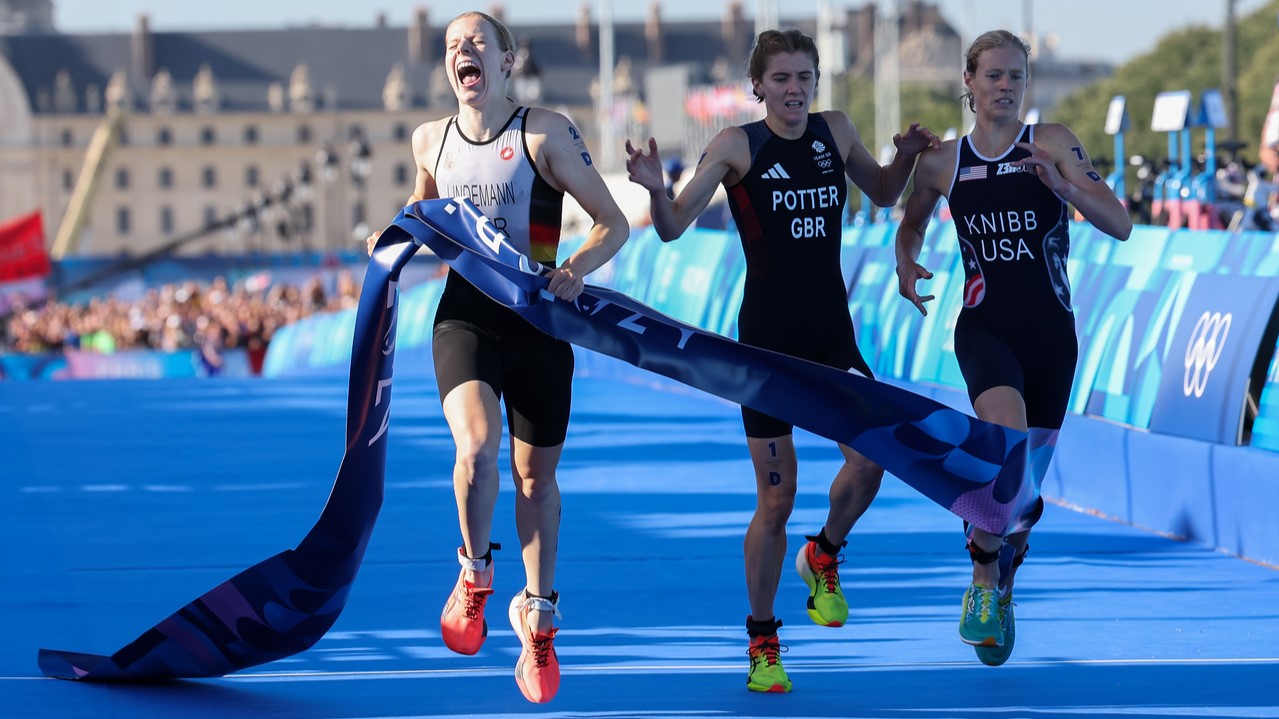
Triathlon Calculator
Calculate your total triathlon finishing time using swim, bike, run and transition times.
🏊 Swim Time
🚴 Bike Time
🏃 Run Time
⏱ Transition Times
What Is a Triathlon Calculator?
A Triathlon Calculator is an online tool that helps athletes estimate their total triathlon finishing time by combining the time required for each part of the race. A triathlon is a unique endurance event that includes three different sports performed continuously: swimming, cycling, and running. Because athletes must complete multiple disciplines in a single race, calculating the expected finish time manually can become complicated.
The Triathlon Calculator makes this process easier by adding your swimming time, cycling time, running time, and transition periods to provide an estimated total race duration. It allows athletes to understand their expected performance, set realistic goals, and prepare a better race strategy.
A triathlon race is completed in the following order:
- Swimming
- Transition 1 (T1)
- Cycling
- Transition 2 (T2)
- Running
Every second matters in a triathlon. While most athletes focus heavily on improving their swim, bike, and run performance, transitions can also have a major impact on the final result. A Triathlon Calculator includes these additional times to provide a more accurate prediction of your race completion time.
Whether you are a beginner preparing for your first Sprint Triathlon or an experienced athlete training for an Ironman event, this calculator helps you understand how each discipline contributes to your final performance. Many triathlon calculators are designed around the same concept of calculating race time and target pacing across swim, bike, and run segments. (Triathlon Calculator)
How Does a Triathlon Calculator Work?
The Triathlon Calculator works by adding the individual times from each race section. The basic formula is:
Total Triathlon Time = Swim Time + Transition 1 + Bike Time + Transition 2 + Run Time
For example:
- Swim: 35 minutes
- Transition 1: 5 minutes
- Bike: 1 hour 20 minutes
- Transition 2: 3 minutes
- Run: 55 minutes
Your estimated total race time would be:
35 minutes + 5 minutes + 80 minutes + 3 minutes + 55 minutes = 178 minutes
Your final estimated finishing time:
2 hours and 58 minutes
This simple calculation helps athletes break down a large endurance goal into smaller and more manageable targets.
Instead of focusing only on the final finishing time, athletes can analyze individual sections and determine where improvements are possible.
For example:
- Can you reduce your swim time?
- Are your cycling speeds improving?
- Is your running pace consistent after cycling?
- Are your transitions efficient?
A Triathlon Calculator provides a complete overview of your expected race performance.
Why Use a Triathlon Calculator?
Set Realistic Race Goals
One of the biggest challenges for triathletes is setting realistic finishing-time goals. Many beginners choose a target time without understanding how much effort is required in each discipline.
A Triathlon Calculator allows you to divide your goal into smaller sections.
For example, instead of saying:
“I want to complete a triathlon in three hours.”
You can create a detailed target:
- Swim: 30 minutes
- Transition 1: 4 minutes
- Bike: 1 hour 25 minutes
- Transition 2: 3 minutes
- Run: 55 minutes
This approach makes your goal measurable and easier to achieve.
Improve Training Efficiency
Triathlon requires balance. Athletes must develop swimming, cycling, and running abilities together. A weakness in one discipline can affect the entire race.
A Triathlon Calculator helps identify areas that require more attention.
For example:
A strong runner may discover that their swimming time is limiting their overall result.
A powerful cyclist may need more endurance training for the final running section.
A beginner may realize that transition practice can save several valuable minutes.
By understanding your race breakdown, you can create a smarter training plan.
Plan Your Race Strategy
Successful triathlon performance is not only about physical fitness. It also requires proper pacing and strategy.
Starting too fast during the swim or bike section can cause fatigue later in the race. A calculator allows athletes to test different scenarios and understand how pacing changes affect the final result.
You can compare:
- Faster swimming with slower cycling
- Conservative cycling with stronger running
- Reduced transition time
- Improved endurance performance
This allows athletes to make better decisions before race day.
Understanding Different Triathlon Distances
Triathlons are available in different distances. Each distance requires different levels of endurance, preparation, and pacing. The Triathlon Calculator supports common race formats including Sprint, Olympic, Half Ironman, and Ironman distances.
Sprint Triathlon
A Sprint Triathlon is one of the most popular starting points for new triathletes. It provides a challenging introduction to the sport without requiring the extreme endurance needed for longer events.
Typical Sprint Triathlon distances include:
- 750-meter swim
- 20-kilometer bike
- 5-kilometer run
Sprint races are often completed within one to two hours depending on the athlete’s fitness level.
For beginners, using a Triathlon Calculator can help estimate how long each section may take and create realistic expectations for their first event.
Olympic Triathlon
The Olympic Triathlon, also known as the standard-distance triathlon, is a common choice for intermediate athletes.
Typical distances include:
- 1.5-kilometer swim
- 40-kilometer bike
- 10-kilometer run
This distance requires a stronger balance between speed and endurance compared to Sprint races.
Athletes must carefully manage their energy because the race duration is longer and pacing becomes more important.
A Triathlon Calculator helps Olympic-distance athletes understand their expected splits and create a complete race plan.
Half Ironman Triathlon (70.3)
The Half Ironman, also known as Ironman 70.3, is a major endurance challenge.
The standard distances include:
- 1.9-kilometer swim
- 90-kilometer bike
- 21.1-kilometer run
The total distance equals 70.3 miles, which is where the name comes from. (Ironman)
Half Ironman events require careful pacing because athletes spend several hours competing. Poor pacing during the bike section can significantly impact running performance.
Using a Triathlon Calculator helps athletes create realistic expectations and understand how each discipline contributes to their final finish time.
Ironman Triathlon
The full Ironman distance is one of the toughest endurance challenges in sports.
A standard Ironman includes:
- 3.8-kilometer swim
- 180-kilometer bike
- 42.2-kilometer marathon run
The total distance equals 140.6 miles. (Ironman)
Because Ironman races can last many hours, athletes must carefully manage:
- Energy levels
- Hydration
- Nutrition
- Pacing
- Recovery
A Triathlon Calculator helps Ironman athletes estimate their expected finish time and create realistic race goals.
Understanding Swim, Bike, and Run Calculations
Swimming Time Calculation
Swimming is the first discipline in every triathlon. For many beginners, swimming can be the most technically challenging part because it requires efficient technique and controlled breathing.
Your swim time depends on:
- Swimming ability
- Water conditions
- Race distance
- Training experience
- Swimming technique
A Triathlon Calculator allows you to enter your expected swim duration and understand how it affects your final race time.
Cycling Time Calculation
Cycling usually covers the longest distance in a triathlon. Improving bike performance can significantly improve overall finishing times.
Cycling performance depends on:
- Average speed
- Terrain
- Fitness level
- Weather conditions
- Bike efficiency
By entering your expected cycling time, you can estimate your complete race duration and evaluate pacing strategies.
Running Time Calculation
The running section is completed after swimming and cycling, which makes it physically demanding.
Your run performance depends on:
- Running fitness
- Energy management
- Previous bike effort
- Hydration
- Nutrition
A Triathlon Calculator helps athletes understand how their expected running time contributes to their total finish.
The Importance of Transition Times
Transitions are often considered the fourth discipline of triathlon.
Although transitions may only take a few minutes, they can significantly affect final rankings, especially in competitive races.
Transition 1 (T1)
T1 occurs after swimming and before cycling.
During this stage, athletes:
- Exit the water
- Remove swimming equipment
- Put on cycling gear
- Prepare their bicycle
Transition 2 (T2)
T2 occurs after cycling and before running.
During this stage, athletes:
- Store their bike
- Change equipment
- Prepare for running
Experienced athletes practice transitions because saving even one or two minutes can improve race results.
The Triathlon Calculator includes transition times to create a more realistic estimate.
How to Use the Calqenix Triathlon Calculator
Using the Calqenix Triathlon Calculator is simple and requires only a few steps.
Step 1: Select Your Race Distance
Choose your event type:
- Sprint Triathlon
- Olympic Triathlon
- Half Ironman
- Ironman
- Custom Race
Selecting a distance helps you understand the expected challenge level.
Step 2: Enter Swim Time
Add your expected swimming duration.
You can enter:
- Hours
- Minutes
- Seconds
Step 3: Enter Bike Time
Add your expected cycling duration based on your training performance.
Step 4: Enter Run Time
Enter your expected running time.
Step 5: Add Transition Times
Include T1 and T2 times for a complete race prediction.
After entering all values, the calculator automatically provides your estimated total triathlon time.
Benefits of Using a Triathlon Calculator for Training
A Triathlon Calculator is useful throughout the entire training process.
Track Progress
Athletes can compare previous estimates with current performance to measure improvement.
For example:
Before training:
- Swim: 40 minutes
- Bike: 1 hour 40 minutes
- Run: 60 minutes
After training:
- Swim: 35 minutes
- Bike: 1 hour 25 minutes
- Run: 50 minutes
This shows measurable improvement.
Build Confidence Before Race Day
Knowing your expected finish time reduces uncertainty. Athletes can approach race day with a clear strategy instead of guessing their performance.
Optimize Weak Areas
The calculator helps identify where improvements provide the biggest benefits.
A five-minute improvement in cycling may have a greater effect than a one-minute improvement in swimming.
Understanding these differences helps athletes train smarter.
Frequently Asked Questions About Triathlon Calculator
What does a Triathlon Calculator calculate?
A Triathlon Calculator calculates your estimated finishing time by combining swim, bike, run, and transition times.
Is a Triathlon Calculator useful for beginners?
Yes. Beginners can use it to estimate their first race time and create realistic training goals.
Can I calculate Ironman race time?
Yes. You can enter your expected swim, bike, run, and transition times to estimate your Ironman finishing time.
Are transition times included in triathlon results?
Yes. Transition periods are part of the official race timing and contribute to the final result.
How accurate is a Triathlon Calculator?
The calculator provides an estimate based on your entered times. Actual race performance can change due to weather, terrain, fitness level, and race conditions.
Can experienced athletes use this calculator?
Yes. Experienced athletes use calculators to test pacing strategies, compare race scenarios, and improve performance.
Conclusion
A Triathlon Calculator is an essential planning tool for anyone participating in a multisport endurance event. Whether you are preparing for your first Sprint Triathlon or training for a full Ironman, understanding your expected race time can improve your preparation and confidence.
The Calqenix Triathlon Calculator provides a simple way to calculate total race time by combining swimming, cycling, running, and transition periods.
By analyzing each section separately, athletes can identify improvement opportunities, create realistic goals, and develop better race strategies.
Triathlon success requires more than just speed. It requires planning, consistency, endurance, and smart pacing. With a reliable Triathlon Calculator, athletes can prepare more effectively and approach every race with a clear understanding of their performance potential.
